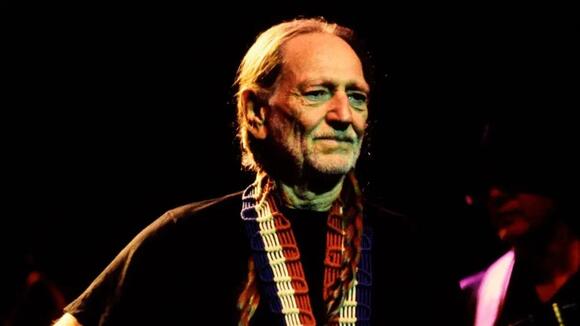
Willie Nelson won’t sit still. At 93, his body aches, his voice wavers, and his stamina fades—but the thought of stopping terrifies him more than death. Close associates say Nelson believes he’ll die if he’s not on stage, a haunting conviction rooted in decades of relentless touring, self-made routines, and an identity fused entirely to performance.
This isn’t just another aging star clinging to the spotlight. It’s a man who equates music with survival. And now, as his physical condition deteriorates, the pressure to retire clashes with a psychological dependency on the roar of crowds and the ritual of nightly sets.
Behind the scenes, Nelson’s inner circle is grappling with a delicate truth: his refusal to step back could shorten his life more than continuing to play.
The Physical Toll of a Lifetime on the Road
Willie Nelson’s body has endured more punishment than most realize. Decades of chain-smoking, late-night sessions, travel fatigue, and minimal rest have taken their toll. In recent years, fans have noticed his unsteady gait, the way he leans heavily on his guitar or a nearby musician during concerts. His once-silky vocals now carry a raspy fragility, more spoken-word than sung in stretches.
Medical sources close to Nelson—who request anonymity—confirm he battles chronic obstructive pulmonary disease (COPD), likely exacerbated by years of cannabis and tobacco use. He’s also suffered multiple bouts of pneumonia, including a near-fatal episode in 2019 that forced him to cancel shows. Doctors reportedly advised bed rest for weeks. He returned to the stage in 12 days.
“You can’t tell Willie not to work,” said a longtime tour manager in a recent interview. “He doesn’t see performing as a job. It’s medicine.”
And for Nelson, it may literally be keeping him alive.
Why Stopping Could Be Deadly
Psychologists who study aging performers note a phenomenon known as “purpose dependency.” When a person’s sense of self-worth, identity, and daily rhythm are entirely tied to a single activity—especially one involving public validation—retirement can trigger rapid physical and mental decline.
Studies show retired artists face a higher risk of depression, cognitive deterioration, and even mortality in the first two years post-retirement. For someone like Nelson, whose career spans over six decades and includes more than 3,000 performances, the stage isn’t just a venue—it’s a lifeline.
“He’s not afraid of dying on stage,” said Dr. Elena Ramirez, a gerontologist specializing in creative professionals. “He’s afraid of dying off it. The performance is his pulse.”
Nelson himself has said in interviews: “If I stop singing, I’ll probably die the next day.” That’s not theatrical flair—it’s a belief etched into his being.
The Rituals That Keep Him Going
Nelson doesn’t follow a conventional health regimen. No strict diets, no gym routines, no early bedtime. Instead, he adheres to a personal ecosystem of rituals that, however unorthodox, sustain him.

His day typically begins with cannabis, which he credits for pain management and lung clarity. He’s a vocal advocate for its medicinal use and even markets his own brand, Willie’s Reserve. Next comes coffee, light stretching, and a review of that night’s setlist—often unchanged for years, a comforting loop of classics like “On the Road Again,” “Blue Eyes Crying in the Rain,” and “Whiskey River.”
The tour bus remains his home. He resists hotels, preferring the familiarity of cramped quarters and engine hum. His crew describes him as disciplined in performance prep: vocal warm-ups with his harmonica, precise mic positioning, and a strict policy of no rehearsals—“If you need to rehearse, you don’t know the song.”
These routines aren’t quirks—they’re anchors. Disrupt them, and the structure collapses.
Fans Notice the Changes—But Still Show Up
Concertgoers in recent tours report a different Willie. The man who once danced barefoot across stages now often sits on a stool. Some shows run under 75 minutes, half the length of his peak-era sets. Yet venues sell out. Fans don’t come expecting perfection—they come for presence.
In Austin, a woman in her 60s said after a 2023 show: “He only sang three full songs. But when he looked at the crowd and smiled? That was enough. I cried.”
That emotional exchange—the reciprocal energy between Nelson and his audience—may be the real fuel. Researchers call it “performer-audience resonance,” a feedback loop where emotional and physiological arousal in one party amplifies the other. For Nelson, it’s oxygen.
But there’s a cost. After performances, he’s often bedridden for a day. Crew members carry his guitar, help him walk, and monitor for breathing issues. One roadie described post-show recovery as “a medical shift more than a cleanup.”
The Family’s Quiet Concern
Nelson’s family admires his resilience but lives in quiet dread. His sister Bobbie, once his pianist and closest musical confidante, passed in 2023. Her absence left a void no standing ovation can fill.
Several of his children and grandchildren have urged him to slow down. One reportedly suggested a farewell tour. Nelson dismissed it instantly. “Farewell means goodbye,” he said. “I’m not saying goodbye.”
Still, adjustments have been made. Touring now follows a “pulse” model—three shows, then five days off. Private jets replace commercial flights. Medical staff travel with him at all times. Oxygen tanks are discreetly placed backstage.
Yet, none of this is retirement. And retirement remains the real enemy in Nelson’s mind.
The Legacy of Never Stopping
Willie Nelson didn’t just build a career—he built a mythology around endurance. From the outlaw country movement of the 1970s to Farm Aid activism, from Grammy wins in five different decades to becoming a cultural symbol of resilience, his narrative has always been one of persistence.
To retire would feel like betrayal—not just to fans, but to himself.

Consider his 2022 album A Beautiful Time, released when he was 89. It won a Grammy for Best Country Album. Critics praised its warmth, honesty, and emotional clarity. But behind the scenes, recording sessions were broken into 20-minute blocks. Nelson needed rest between takes.
Yet he pushed through. Because stopping meant losing momentum. And momentum, for Nelson, is life.
What Happens When the Music Finally Stops?
No one knows when—or if—that day will come. But contingency plans exist.
Nelson’s estate and business team have discussed legacy projects: posthumous releases from archived recordings, hologram tours (a concept he’s reportedly “open to, if it feels real”), and expanded Farm Aid involvement.
But none of it replaces the man himself. And none of it answers the deeper question: Can someone whose entire existence orbits around performance survive without it?
History offers grim clues. Glen Campbell continued touring with Alzheimer’s until he couldn’t speak. Leonard Cohen performed into his 80s, calling it “the only reason I get up.” Both died within years of their final shows.
For Nelson, the line between dedication and self-destruction is vanishing.
The Truth Behind the Fear
This isn’t just about fame or money. It’s about identity.
Willie Nelson isn’t performing because he wants to—he’s performing because he believes he must. The fear isn’t dying on stage. It’s dying in silence, in stillness, disconnected from the rhythm that’s defined every breath of his adult life.
His body is failing. But his spirit refuses to concede.
And as long as he can stand, strum, and sing—even if just a few songs—he’ll keep going. Because for Willie Nelson, the music isn’t a career.
It’s a heartbeat.
Understanding the Psychology of Aging Performers
- Purpose as a Survival Mechanism: Artists like Nelson often develop a biological dependence on creative output. The brain releases dopamine during performances, creating a cycle of reward and reinforcement.
- Social Validation as Vital Signs: Regular applause and connection with fans mimic emotional nourishment. Removing it can lead to withdrawal-like symptoms.
- Routine as Resistance to Decay: Structured days centered around performance slow cognitive decline. Disruption increases confusion and anxiety.
- The “Use It or Lose It” Mindset: Many aging artists believe physical and mental abilities deteriorate faster without constant use—often correctly, within limits.
Practical Considerations for Longevity in the Arts
- Controlled Touring: Limit shows to preserve energy. Nelson’s current “play, rest, repeat” model is increasingly common among veteran artists.
- Medical Integration: On-call staff, pre-show health checks, and emergency protocols are non-negotiable at this stage.
- Legacy Documentation: Recording sessions, interviews, and archival projects ensure continuity, even if live performance ends.
- Family Involvement: Having trusted relatives in management roles helps balance passion with health.
- Audience Awareness: Fans should value presence over perfection. A 15-minute set from Nelson holds more meaning than a flawless two-hour show from a younger artist.
The path forward isn’t about convincing Willie Nelson to stop. It’s about ensuring he can continue—safely, meaningfully, and on his own terms.
For now, as long as there’s a stage, a guitar, and a crowd willing to listen, Willie Nelson will be there.
Because for him, there is no other way to live.
FAQ
What should you look for in Frail Willie Nelson Faces Retirement Fears at 93? Focus on relevance, practical value, and how well the solution matches real user intent.
Is Frail Willie Nelson Faces Retirement Fears at 93 suitable for beginners? That depends on the workflow, but a clear step-by-step approach usually makes it easier to start.
How do you compare options around Frail Willie Nelson Faces Retirement Fears at 93? Compare features, trust signals, limitations, pricing, and ease of implementation.
What mistakes should you avoid? Avoid generic choices, weak validation, and decisions based only on marketing claims.
What is the next best step? Shortlist the most relevant options, validate them quickly, and refine from real-world results.